
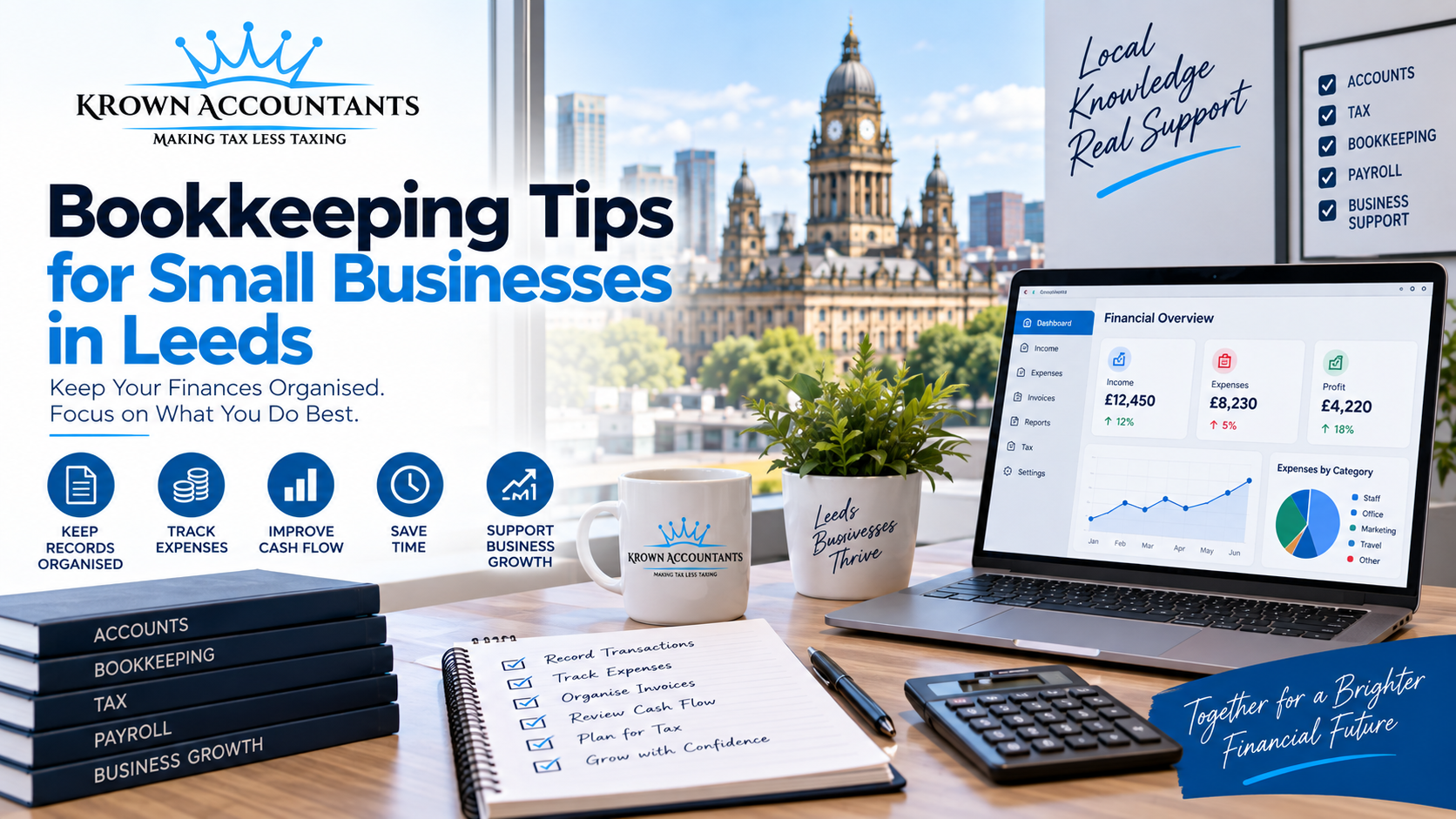
Managing the finances of a small business can become difficult when bookkeeping is left until the last minute. Keeping accurate financial records throughout the year can help business owners understand their income, expenses and overall financial position.
For businesses searching for accountants in Leeds, professional bookkeeping support can make everyday financial administration easier and provide a stronger foundation for accounting and tax work.
In this guide, we cover practical bookkeeping tips that Leeds business owners can use to keep their financial records more organised.
Why Bookkeeping Matters for Small Businesses
Bookkeeping is the process of recording and organising the financial transactions of your business.
It provides the information needed to understand how money is moving through your business and can support wider accounting and tax processes.
Good bookkeeping can help you:
- Track business income
- Monitor expenses
- Keep financial records organised
- Understand cash flow
- Prepare for accounting deadlines
- Identify outstanding invoices
- Review business performance
- Provide accurate information to your accountant
For growing businesses, maintaining consistent records becomes increasingly important.
If you need professional support, Krown Accountants provides dedicated bookkeeping services.
1. Record Transactions Regularly
One of the simplest ways to improve bookkeeping is to avoid letting transactions build up.
Set aside time regularly to record income and expenses. This makes it easier to keep your records current and reduces the amount of work required later.
Regular bookkeeping can also help you spot unusual transactions or missing information sooner.
2. Keep Business and Personal Transactions Separate
Using separate accounts for business and personal finances can make bookkeeping considerably easier.
When business transactions are mixed with personal spending, it can take additional time to identify which payments relate to the business.
Keeping finances separate can provide a clearer record of business activity and make it easier to review your accounts.
3. Keep Your Invoices Organised
Invoices are an important part of business records.
Make sure you maintain an organised record of invoices issued to customers and invoices received from suppliers.
Regularly reviewing outstanding invoices can also help you understand which customers have not yet paid.
This information can be particularly useful when reviewing your business cash flow.
4. Track Business Expenses
Business owners should maintain appropriate records of their business expenses.
Depending on the nature of your business, expenses might include:
- Office costs
- Software subscriptions
- Marketing
- Equipment
- Travel
- Professional services
- Stock and supplies
- Staff-related costs
Keep supporting records where appropriate and make sure expenses are recorded consistently.
If you are unsure how a particular expense should be treated, speak to a qualified professional rather than making assumptions.
5. Review Your Cash Flow
Bookkeeping can provide useful information about your business cash flow.
Reviewing money coming into and leaving your business can help you understand your available funds and upcoming commitments.
Consider monitoring:
Money coming in: Customer payments and other business income.
Money going out: Suppliers, staff costs, operating expenses and other payments.
Outstanding invoices: Money customers still owe your business.
Upcoming commitments: Costs that you know will need to be paid.
Understanding these areas can help you plan ahead.
6. Don’t Ignore Small Transactions
Small transactions can add up over time.
It can be tempting to ignore minor expenses or record them later, but consistently maintaining your records is a better approach.
A simple bookkeeping routine can prevent a large amount of information from accumulating at the end of the month or financial year.
7. Consider Cloud Accounting
Cloud accounting provides a digital way to manage financial information.
Depending on the software you use, it can help you organise transactions, access financial information and share records with your accountant.
For businesses looking to modernise their accounting processes, Krown Accountants provides cloud accounting solutions.
Cloud accounting can be particularly useful when a business owner and accountant need to collaborate on financial information.
8. Review Your Records Before Important Deadlines
Don’t wait until an accounting or tax deadline is approaching before checking your records.
A regular review can help identify:
- Missing invoices
- Unrecorded expenses
- Unpaid customer invoices
- Incorrect transaction information
- Missing supporting documents
Having this information organised in advance can make the preparation process much smoother.
For wider financial support, explore Krown Accountants’ accounting services.
9. Think About Tax Throughout the Year
Bookkeeping and tax are closely connected because accurate financial records provide important information for accounting and tax work.
Rather than thinking about tax only when a deadline arrives, businesses should maintain their financial information throughout the year.
Krown Accountants also provides dedicated tax services for businesses and professionals.
Professional guidance can help you understand the requirements relevant to your circumstances.
10. Consider Outsourcing Bookkeeping
Business owners often try to handle every task themselves, especially when a business is new.
However, as the business grows, bookkeeping can become time-consuming.
Outsourcing bookkeeping can allow you to spend more time on:
- Customers
- Sales
- Marketing
- Employees
- Business development
- Strategic planning
Professional bookkeeping support can also help keep your records more consistent.
Bookkeeping Support for Different Leeds Businesses
Accounting requirements are not identical for every business.
Retail and E-commerce
Retail and online businesses may need to manage sales, purchases, stock-related information and operating expenses.
Krown Accountants provides industry information for retail and e-commerce businesses.
Hospitality and Catering
Restaurants, cafés and catering businesses often have regular supplier payments, staff costs and changing revenue.
Learn more about accounting support for hospitality and catering businesses.
Construction and Property
Construction and property businesses can involve multiple projects, suppliers and other financial transactions.
Krown Accountants provides dedicated information for real estate and construction businesses.
Travel and Tourism
Businesses operating in tourism and travel can have their own financial management requirements.
You can explore the dedicated travel and tourism industry section.
Healthcare Professionals
Healthcare professionals can have accounting requirements that differ from other businesses.
Krown Accountants provides locum and salaried GP accounting support and NHS pension guidance for GPs.
When Should a Small Business Use Professional Bookkeeping?
There is no single point when every business needs professional bookkeeping.
However, it may be worth considering professional support if:
- You are spending too much time on bookkeeping
- Your business transactions have increased
- Your records are becoming difficult to manage
- You are employing staff
- You have multiple income streams
- You are struggling to keep records updated
- You want more time to focus on running your business
A professional bookkeeping service can help establish a consistent process for maintaining your financial records.
Frequently Asked Questions
1. What does a bookkeeper do for a small business?
A bookkeeper helps maintain and organise the financial records of a business.
Depending on the service provided, this can involve recording transactions, organising financial information, keeping track of income and expenses and maintaining bookkeeping records.
Good bookkeeping gives the business owner and accountant more reliable information to work with.
The exact responsibilities depend on the arrangement between the business and bookkeeping provider.
2. How often should a small business update its bookkeeping?
The ideal frequency depends on the size and activity of the business.
Businesses with a high volume of transactions may need to update their records frequently, while smaller businesses may have fewer transactions to process.
The important thing is to avoid allowing records to become significantly out of date.
Regular bookkeeping makes it easier to understand your current financial position and identify missing information before important accounting work is required.
3. Can bookkeeping help with tax preparation?
Yes. Accurate bookkeeping provides financial information that can be useful when preparing accounts and dealing with tax-related work.
When income and expenses have been recorded consistently, it is generally easier to review the financial activity of the business and identify information that may be required.
However, bookkeeping itself is not a substitute for professional tax advice. If you are unsure about a tax matter, it is sensible to speak with an accountant.
Krown Accountants provides both bookkeeping and tax services.
4. Is cloud accounting suitable for a small business?
Cloud accounting can be suitable for many small businesses that want to manage their financial information digitally.
It can provide a convenient way to organise accounting information and share relevant records with an accountant.
The right software depends on the individual business, its requirements and the accounting processes already in place.
Krown Accountants provides cloud accounting support for businesses interested in digital accounting solutions.
5. Should I do my own bookkeeping or hire an accountant?
This depends on the complexity of your finances, your available time and your confidence with bookkeeping.
A very small business with straightforward transactions may choose to manage basic bookkeeping internally.
However, professional support may become more valuable as the number of transactions increases or when the owner needs to focus more heavily on running and growing the business.
Some businesses use accounting software themselves while outsourcing bookkeeping and tax-related work to professionals.
Final Thoughts
Good bookkeeping gives a business a clearer view of its financial activity.
For small businesses in Leeds, maintaining accurate records, monitoring expenses, keeping invoices organised and reviewing cash flow can make financial management much easier.
If bookkeeping is becoming time-consuming or difficult to manage, professional support can provide a practical solution.