
Managing business finances becomes more difficult as a company grows. Keeping track of invoices, expenses, bank transactions, tax records, and financial reports can take valuable time, especially for small business owners who are already managing daily operations.
Cloud accounting provides a more flexible way to manage business finances. Instead of relying entirely on traditional paperwork or desktop-based accounting systems, businesses can access their financial information online and work with their accountant more efficiently.
For businesses across Birmingham, cloud accounting can make everyday financial management more organized, accessible, and convenient.
What Is Cloud Accounting?
Cloud accounting is a way of managing financial records and accounting information through online software.
Unlike traditional accounting systems that may rely on software installed on one computer, cloud accounting allows authorized users to access financial information through an internet connection.
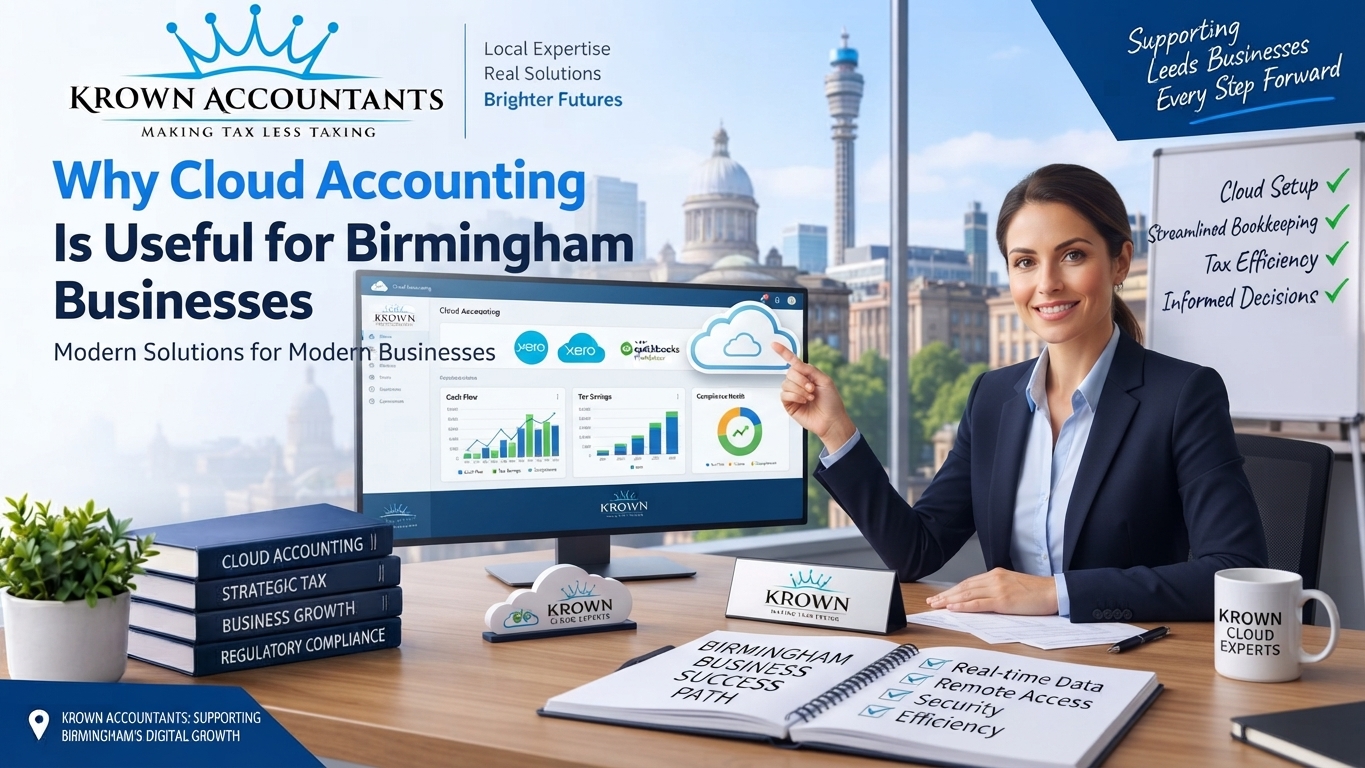
Popular cloud accounting platforms include:
Xero
QuickBooks
Other online accounting platforms
The exact features available depend on the software and the needs of the business.
10 Key Benefits of Cloud Accounting for Birmingham Businesses
1. Access Your Financial Information Online
One of the main benefits of cloud accounting is accessibility. Business owners can access their accounting information from different locations, provided they have the appropriate access and an internet connection. This is useful for Birmingham businesses where owners, managers, and accountants may not always work from the same location. You can review income, expenses, bank transactions, invoices, and tax-related information from anywhere.
2. Reduce Paperwork
Traditional accounting processes involve significant paperwork. Invoices, receipts, and records can quickly become disorganized when stored manually. Cloud accounting helps businesses move towards digital record-keeping, making it easier to maintain consistent records, find documents quickly, and share files with your accountant.
3. Connect Your Business Bank Account
Many cloud accounting systems can connect directly with business bank accounts. This allows transactions to be imported automatically into the accounting system, streamlining bookkeeping. However, transactions should still be reviewed regularly to ensure accuracy.
4. Make Bookkeeping More Efficient
Good bookkeeping is essential for understanding business performance. Cloud accounting brings financial information together into one digital system, helping businesses manage sales, expenses, supplier payments, and customer invoices seamlessly.
5. Get a Clearer View of Business Finances
Business owners need accurate financial data to make decisions. Cloud accounting makes it easier to monitor revenue, expenses, outstanding invoices, and profit-and-loss statements in real time, rather than relying on outdated spreadsheets.
6. Make Working With Your Accountant Easier
Cloud accounting improves collaboration between a business and its accountant. Instead of sending bulky files or spreadsheets back and forth, authorized users work from the same system, making it easier for accountants to review records, prepare reports, and support tax planning.
7. Improve Invoice Management
Getting paid on time is crucial for healthy cash flow. Cloud accounting software provides powerful tools for creating digital invoices, tracking outstanding balances, monitoring customer payments, and reviewing overdue amounts.
8. Support Better Tax Preparation
Keeping financial records organized year-round makes tax preparation effortless. Rather than gathering receipts at the last minute, businesses can maintain records continuously to support Corporation Tax, VAT, Self Assessment, and payroll requirements.
9. Scale With Growing Birmingham Businesses
As a company grows, its financial administration becomes more complex, involving more employees, transactions, and tax responsibilities. A cloud accounting system provides a scalable solution that develops alongside your business.
10. Support Remote and Flexible Working
Modern businesses often have teams working remotely. Cloud accounting allows business owners to manage finances securely whether they are in the office, at home, or traveling.
Frequently Asked Questions (FAQs)
Q1: What is cloud accounting?
Cloud accounting is a method of managing financial records using online software, allowing authorized users to access data securely via an internet connection.
Q2: Is cloud accounting suitable for small businesses in Birmingham?
Yes, it is ideal for small businesses, freelancers, and growing companies, depending on their specific size and activities.
Q3: Can cloud accounting help with bookkeeping?
Yes, it helps organize transactions, manage invoices, and connect bank accounts, though regular reviews are still needed to maintain accuracy.
Q4: Can an accountant manage my cloud system?
Absolutely. Accountants can assist with software setup, training, bookkeeping, and ongoing tax reporting.
Q5: Is Xero or QuickBooks better?
Neither is universally “better”—the right choice depends on your business size, required features, and specific workflow needs.
Q6: Does cloud accounting replace an accountant?
Not entirely. While it automates tasks, professional guidance remains vital for tax strategy, compliance, and complex financial decisions.
Conclusion
Cloud accounting provides Birmingham businesses with a more organized and accessible way to manage financial information. From digital bookkeeping to seamless collaboration with accountants, the right cloud setup simplifies everyday tasks and supports long-term growt